Explore Alaska
Alaska is where clean energy technologies earn the confidence to power anywhere.
Alaska’s remote and isolated communities demand energy systems that work reliably. Projects integrating renewable generation, energy storage and advanced controls there give developers operating results that can inform work in other demanding markets. As generation and transmission investment grows, Alaska’s experience points the way for larger systems, from the state’s main grid to places elsewhere.
Over 200 isolated microgrids
Over 200 isolated microgrids
Alaska’s extensive network of isolated power systems gives developers practical experience integrating renewable generation, energy storage and controls where connections to larger grids are unavailable.
More than 110 operating renewable energy projects
More than 110 operating renewable energy projects
Alaska’s Renewable Energy Fund has helped bring more than 110 projects into operation since 2008, supporting renewable energy development across remote communities and regional power systems.
One of the nation’s largest tidal-energy resources
One of the nation’s largest tidal-energy resources
Cook Inlet has an estimated 80 terawatt-hours of annual technical tidal energy potential, creating opportunities for marine energy development as Alaska expands its renewable electricity supply.
A utility-scale grid serving roughly 75% of Alaskans
A utility-scale grid serving roughly 75% of Alaskans
The Railbelt connects Alaska’s major population centers and creates opportunities for investment in renewable generation, energy storage and transmission infrastructure.
Key Clean Energy Sectors
Key Clean Energy Projects
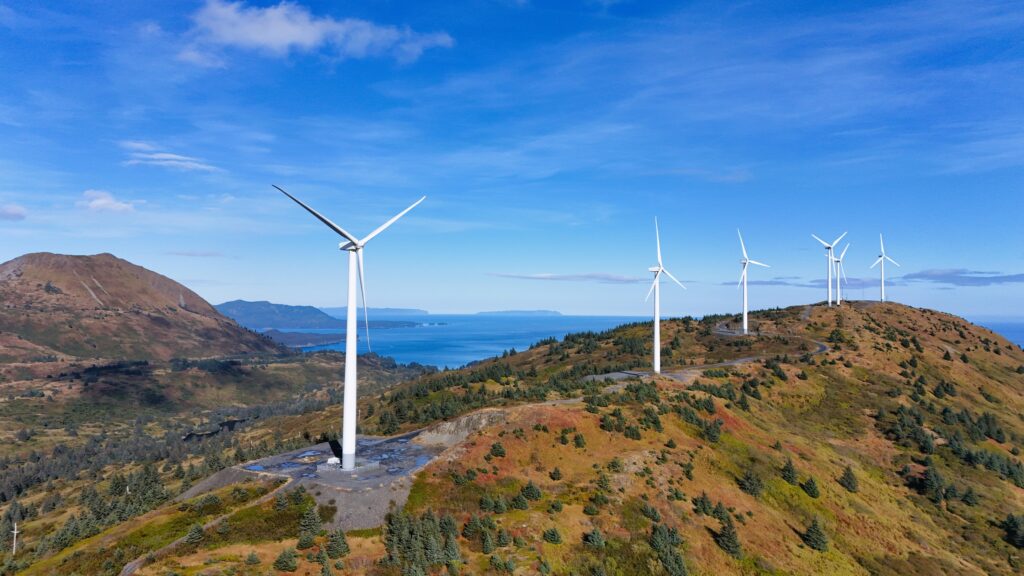
Operating a Nearly 100% Renewable Isolated Grid
Company / Partners: Kodiak Electric Association
Kodiak Electric Association operates an isolated grid powered by the Terror Lake Hydroelectric Plant, six wind turbines, two flywheels and a battery energy storage system, with diesel generation available as backup. In 2025, 99.77% of the electricity it generated came from renewable resources, and the system experienced limited outages despite winds exceeding 122 miles per hour.
Impact:
- Operates on nearly 100% renewable electricity without a connection to a larger grid
- Integrates hydropower, wind, flywheels, battery storage and backup generation
- Maintains reliable service during severe weather
- Demonstrates how renewable generation and storage can support isolated power systems
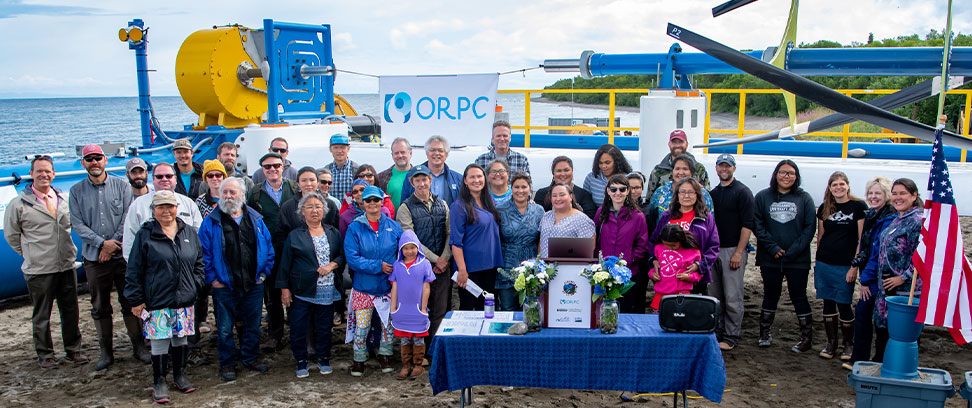
Integrating River Energy into a Community Microgrid
Company / Partners: Igiugig Village Council, ORPC Alaska, U.S. Department of Energy
Igiugig Village Council and the Ocean Renewable Power Company Alaska have combined RivGen® river-energy devices with battery storage, smart controls and diesel backup in the community’s isolated microgrid. The installation is the longest-operating marine energy project in the Americas, and its technology has operated through two Alaska winters, extreme cold and major ice events.
Impact:
- Generates predictable local electricity from free-flowing river currents
- Reduces reliance on imported diesel fuel
- Integrates river energy, battery storage and automated controls
- Supports local management of the community’s power system
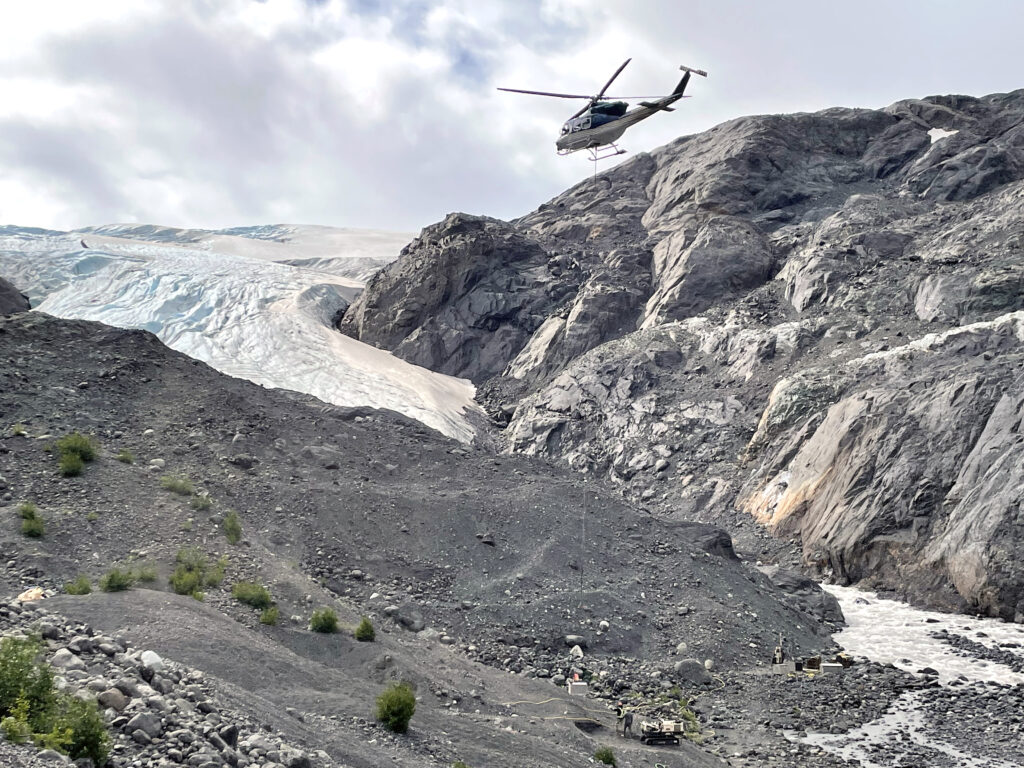
Expanding Alaska’s Largest Hydropower Facility
Company / Partners: Alaska Energy Authority, Railbelt Utilities
The Alaska Energy Authority filed its final federal license-amendment application for the Bradley Lake Expansion Project in June 2026. The proposed expansion would add approximately 167,000 megawatt-hours of annual hydropower generation – enough electricity for up to 30,000 homes – while using the existing Bradley Lake reservoir, power plant and transmission system. Engineering, environmental studies and site investigations are underway.
Impact:
- Will add approx. 167,000 MWh of renewable generation each year
- Will generate more renewable electricity using existing hydropower infrastructure
- Will offset approx. 1.5 billion cubic feet of natural gas annually
- Will support approx. 3,250 construction jobs and generate more than $584 million in statewide economic activity
Recent News
The latest clean energy industry news from Washington state.