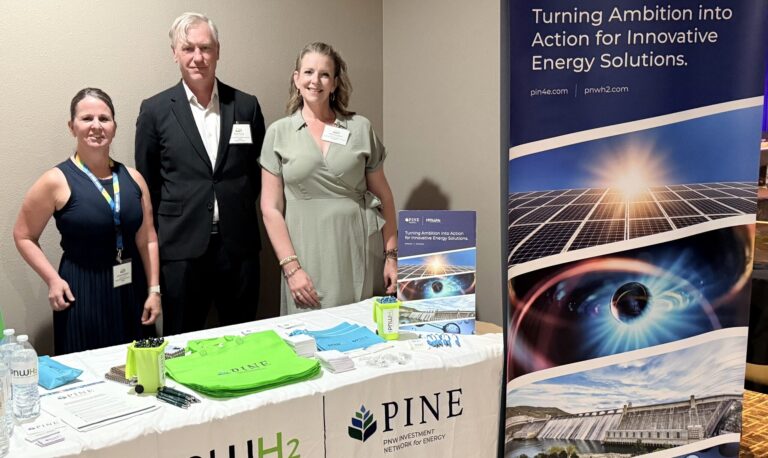
Over the past few months, the PINE leadership team has been on the road, connecting with policymakers, industry leaders and investors working to grow the Pacific Northwest’s clean energy technology economy.
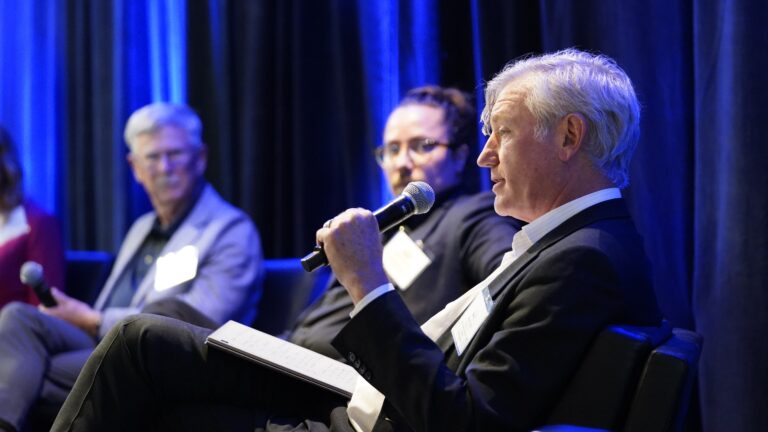
From the Washington Economic Development Association (WEDA) Summer Conference to the North America SAF Summit, Geothermal Rising Conference and Cascadia Sustainable Aviation Leadership Summit, a consistent theme emerged: the industry is coming together with shared ambition and continued confidence in the region’s future.
From the discussions, three common themes emerged:
1. The Future of Clean Fuels Won’t Develop in Separate Lanes
Across the events, leaders emphasized the need to connect public and private sector stakeholders to accelerate progress. At the North America SAF Summit, discussions highlighted the growing intersection of sustainable aviation fuel (SAF), maritime fuels, hydrogen and other renewable technologies, underscoring opportunities to build momentum across sectors.
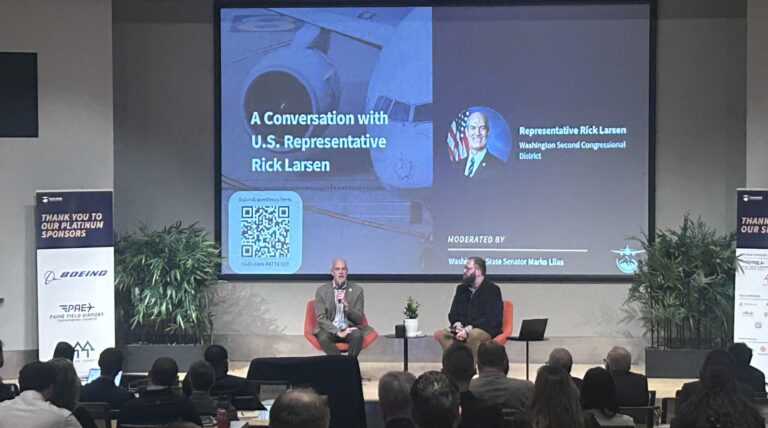
That theme carried into the Cascadia Sustainable Aviation Leadership Summit, where U.S. Representative Rick Larsen and Washington State Senator Marko Liias discussed national aviation fuel policy and the Pacific Northwest’s continued infrastructure development to support SAF production. Their discussion made clear that building a thriving SAF ecosystem will require coordination among policymakers, infrastructure partners, fuel producers and aviation leaders throughout the region. No single organization or sector can get us there alone.
2. The Pacific Northwest Continues to Attract National & Global Interest
These events drew clean energy executives from across the country and around the world interested in investing in the region. The conversations reinforced the Pacific Northwest’s appeal: abundant energy resources, ports connected to global markets, leading national laboratories and research universities, and a strong manufacturing base.
3. Tomorrow’s Energy Jobs Depend on Long-Term Planning Today
Another recurring theme was the need to build an energy ecosystem for the future, not just the one we need today. That means investing in infrastructure and planning transmission capacity around projected needs, not just responding to current constraints.
Sustaining that progress also requires continually educating communities, policymakers and investors about the economic opportunities that come with supporting a strong energy future.